
© 2026

The Exception Management Tool (EMT) is a web app I designed at Sharegain to streamline how operations teams handle trade exceptions in securities lending. It centralises and automates exception handling, cuts manual intervention and surfaces the trade insights teams need to resolve issues faster.
I led research, concept, design, user testing and delivery of key modules, working with a product manager, a team lead and 6+ engineers.
82%
fewer manual operations per trade
The old admin dashboard was slow, hard to navigate and missing essential functions, so users relied on manual workarounds. Trade details and exception statuses were buried, manual input raised the risk of errors, and there were no automated workflows for failed trades, collateral mismatches or liquidity issues.
These inefficiencies created operational bottlenecks and heightened financial risks, making an improved solution essential.
The goal: give the operations team one efficient tool that streamlines exception management and removes inefficiencies.
I blended the Double Diamond with Continuous Discovery and Delivery, exploring the problem through stakeholder input and iterating on feedback so each decision addressed a real need.
Four insights shaped the direction.
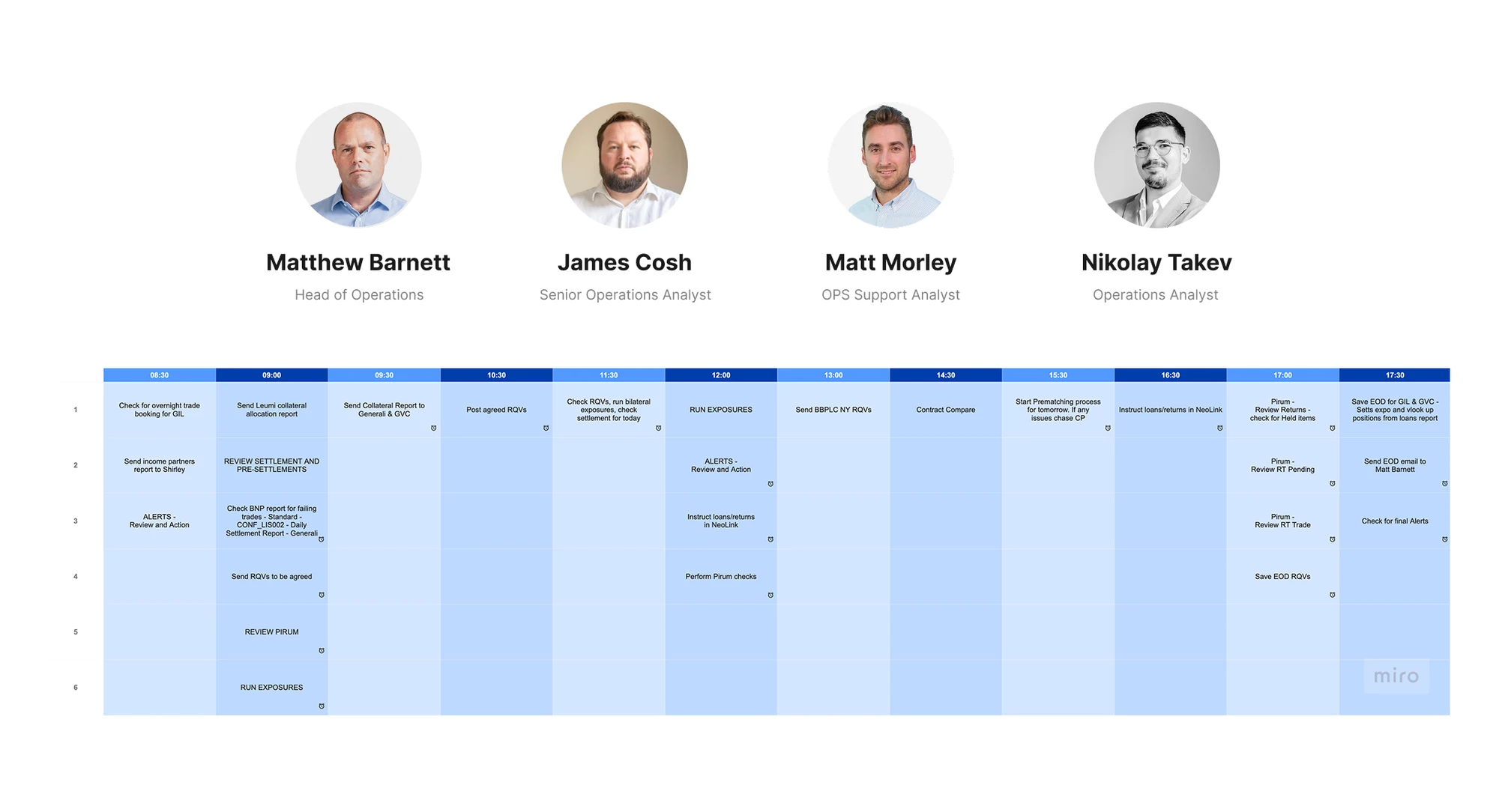
Working daily with four operations stakeholders showed a highly structured workflow, with critical tasks tied to specific times: reviewing settlements, monitoring exposures and handling loan returns. Automation has the most impact where timing is tightest.
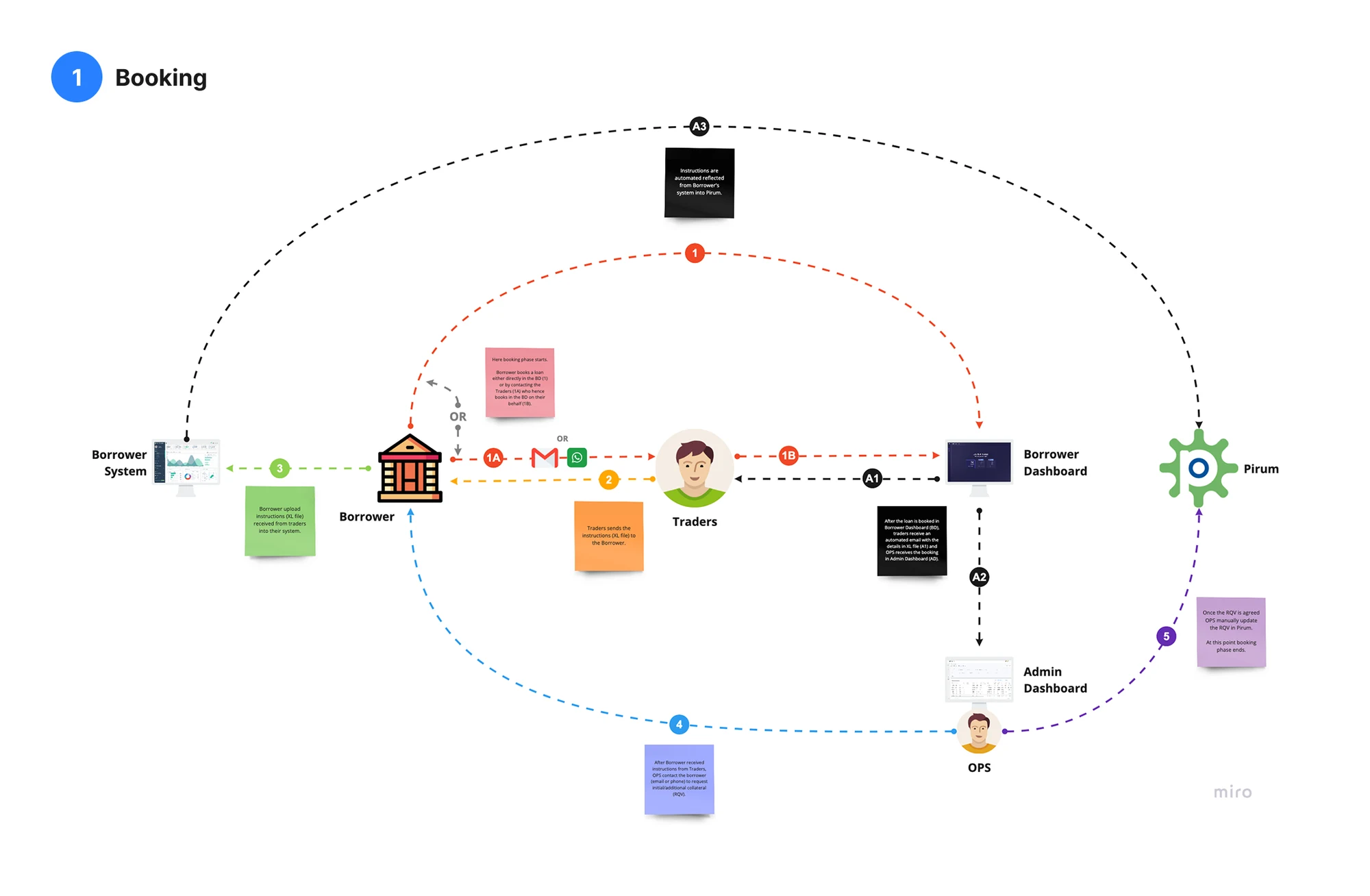
Booking, Collateralization, Instructions, and Statuses & Settlement. Each stage plays a crucial role in ensuring smooth trade execution.
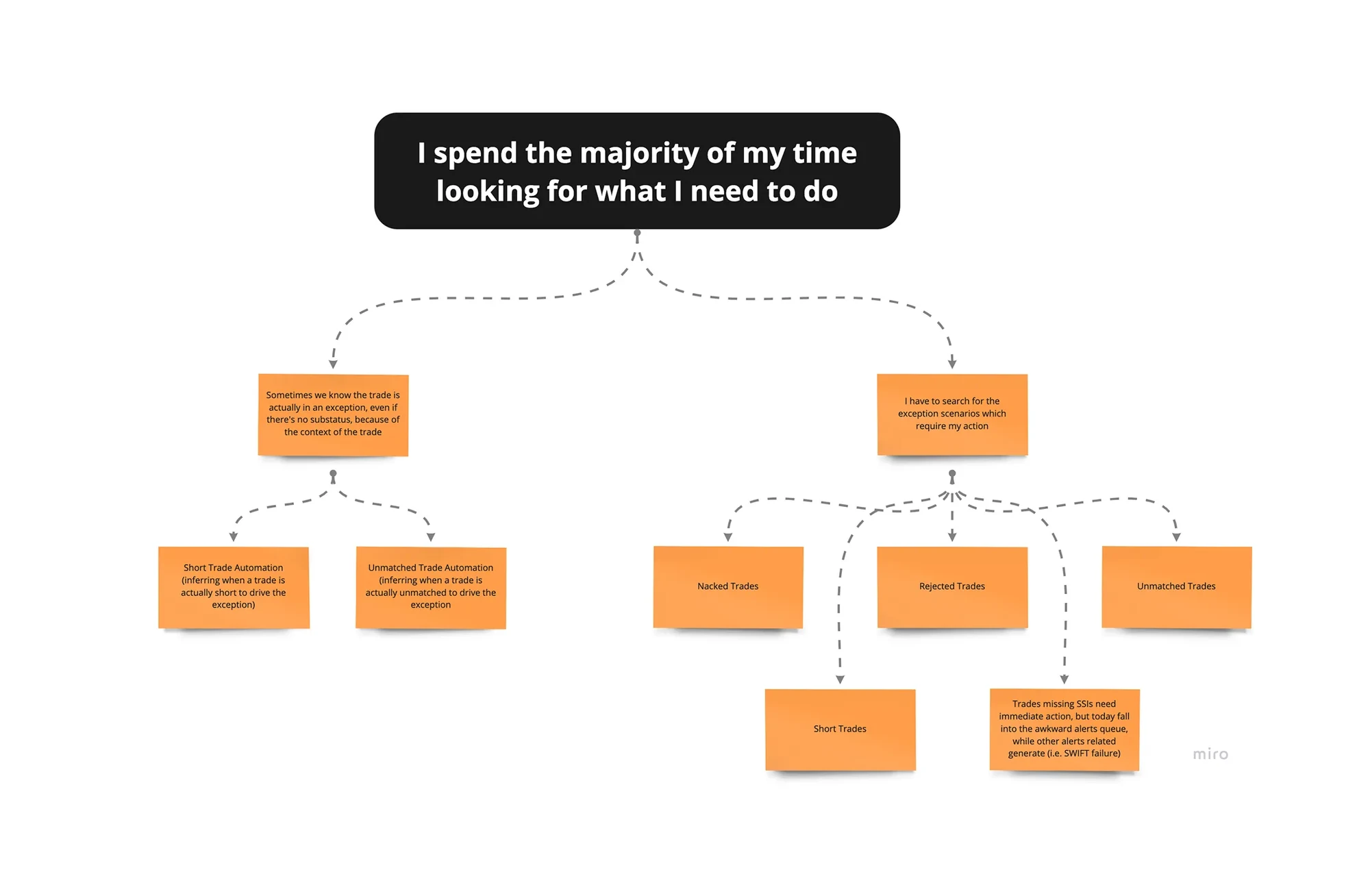
Interviews with the Product Manager and Team Lead fed an Opportunity Solution Tree. Five themes emerged: time wasted searching for tasks, effort correcting data, poor UX inefficiencies, the burden of client communications, and reliance on engineering for support.
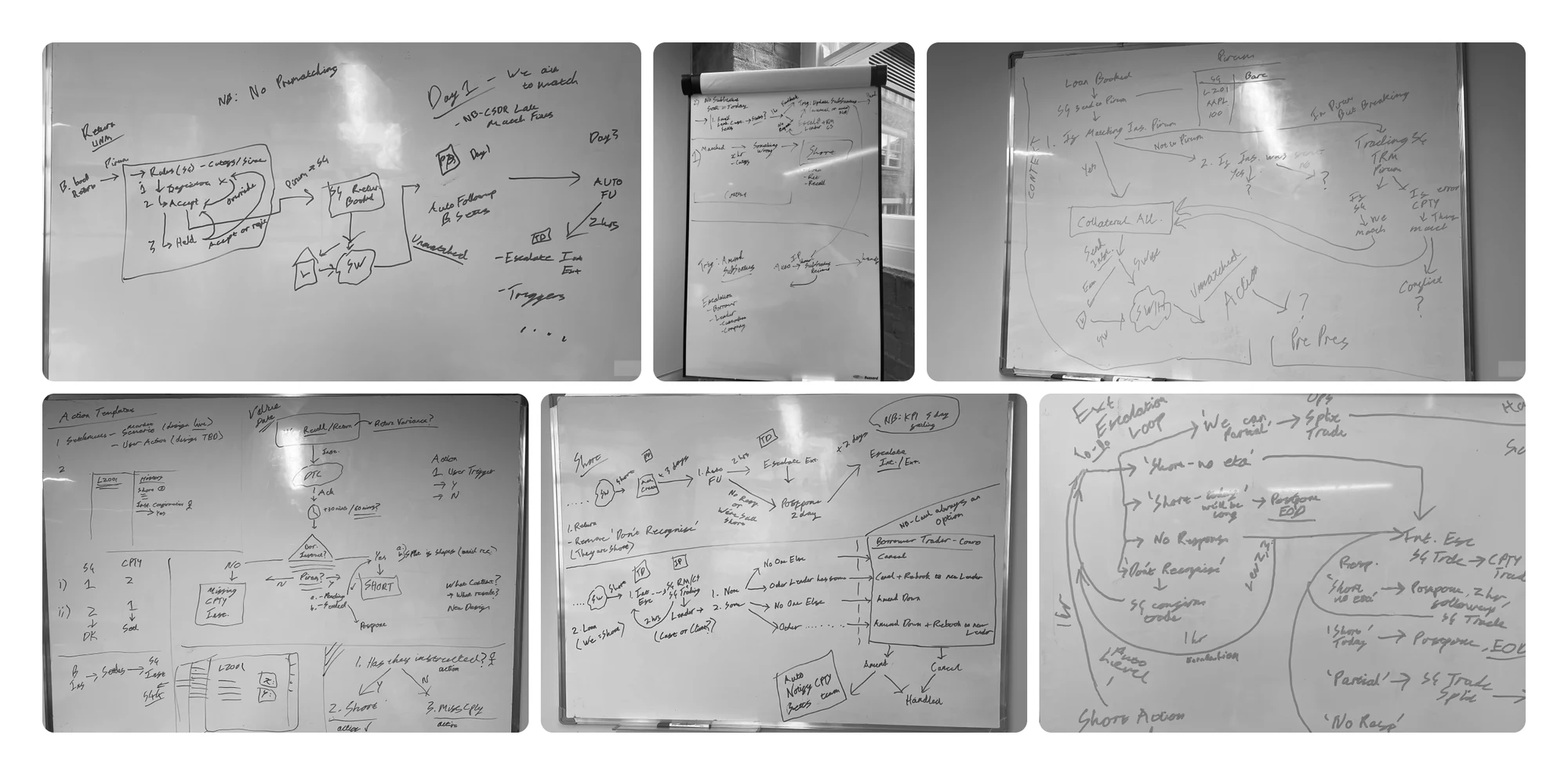
Interviews mapped the flows for Short, Unmatched, Nacked and Rejected trades: how users identify exceptions, what actions they take and the logic behind each decision. These became the foundation of the settlement experience.
The MVP focused on the daily Settlement pain points: Short, Unmatched and Nacked exceptions that need constant manual intervention. The aim was to reduce friction and deliver value from day one.
Long term, an Exception Management Mechanism (EMM) provides the core logic for handling exceptions across Collateral, Billing, Corporate Actions and more, so the platform can scale.
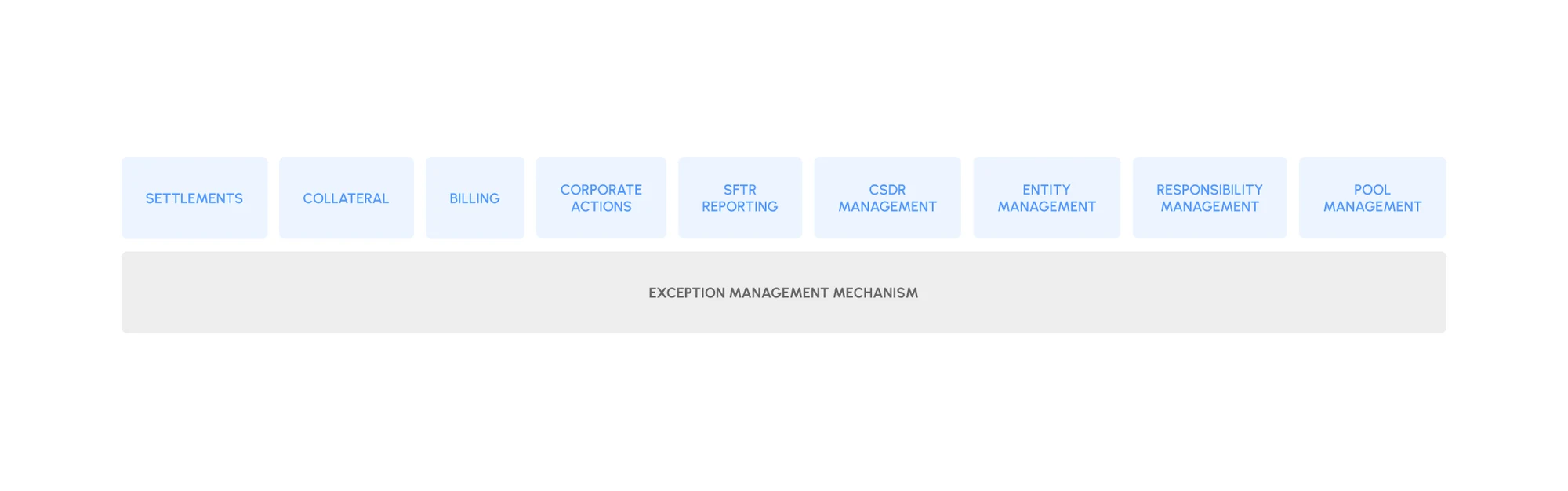
The Exception Management Mechanism sits beneath every module, from Settlements to Pool Management.
I developed a cascade layout that puts all the necessary information in one place and lowers cognitive load: Exceptions on the left, Context in the centre and History on the right.
I then refined the structure, hierarchy and interactions of the key sections.
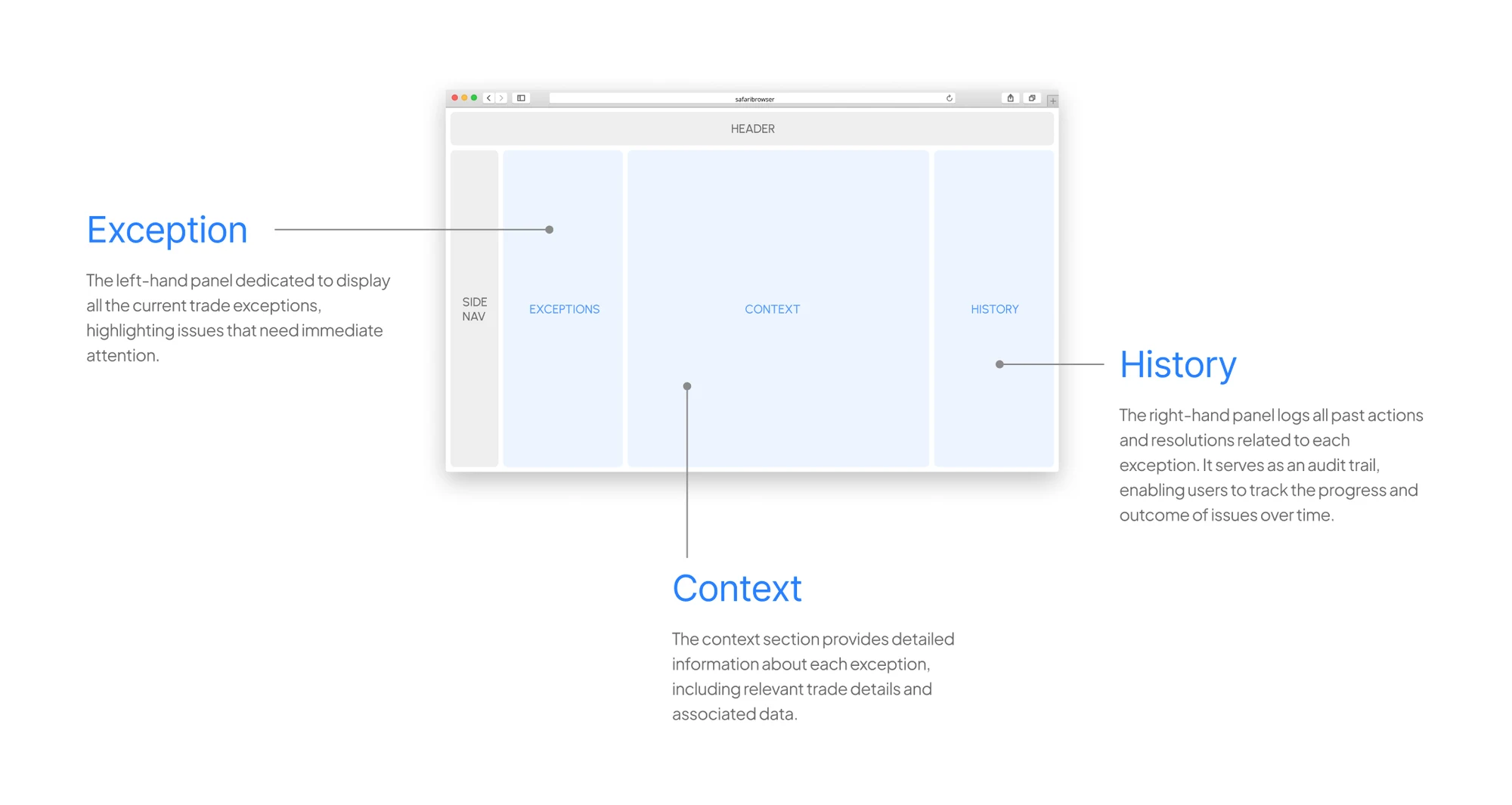
Cascade layout: Exceptions, Context and History.
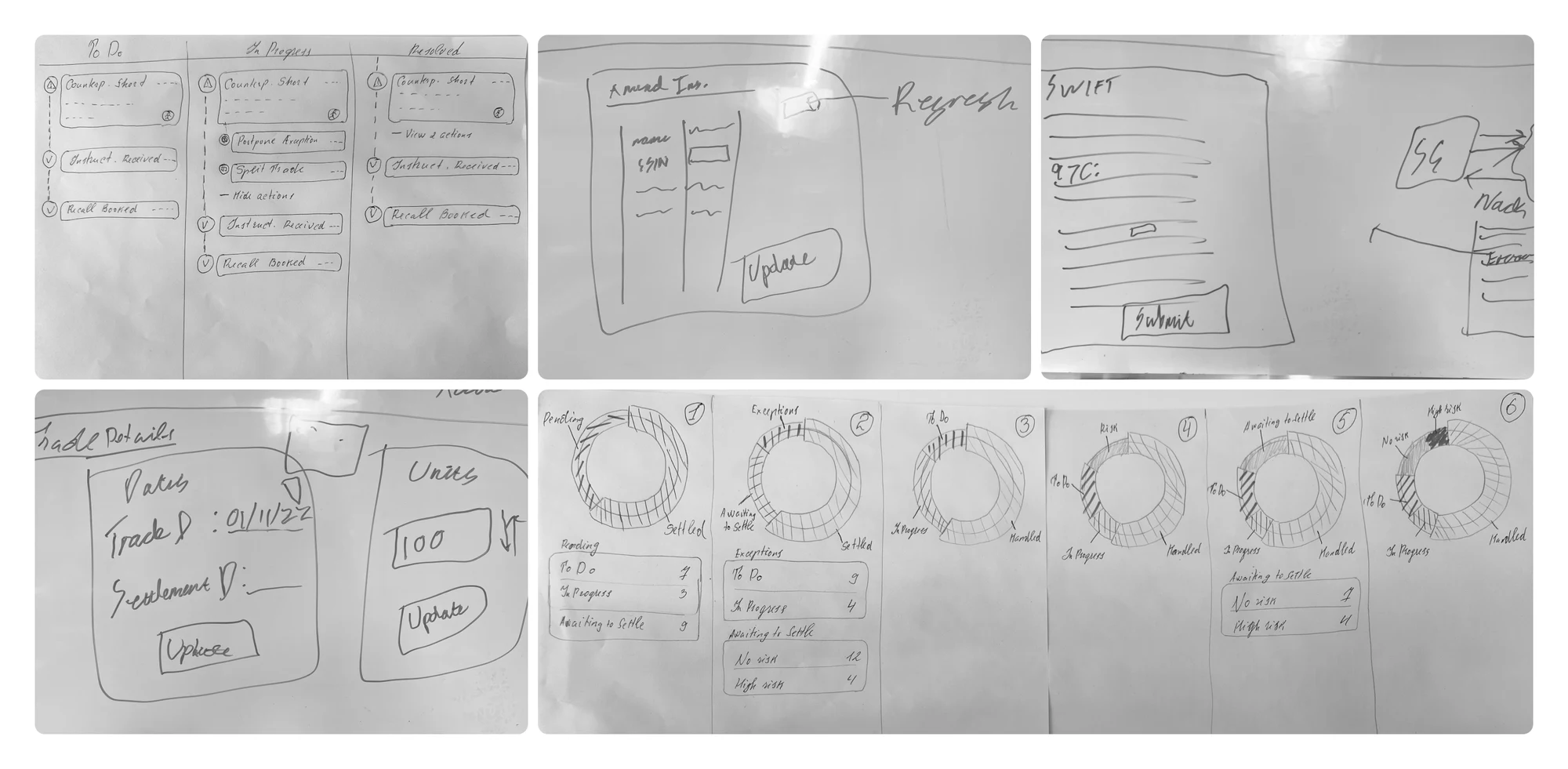
Sketches exploring structure, hierarchy and interactions.
First tried separate pages per exception type, as in the old admin dashboard. Operations users jumped between exceptions all day and lost context. Changed to the cascade layout, with everything for a trade in one view.
First tried plain status labels. The team worked against settlement deadlines. Changed to a timer on each group showing time left until the first exception hits its deadline, so the most urgent work comes first.
First tried a single flat list sorted by date. Short, Unmatched, Nacked and Rejected trades each need different actions. Changed to grouped exceptions with the actions that fit each type.
EMT streamlines the resolution of trade exceptions, reduces manual effort and minimises financial risk. Four panels carry the experience.
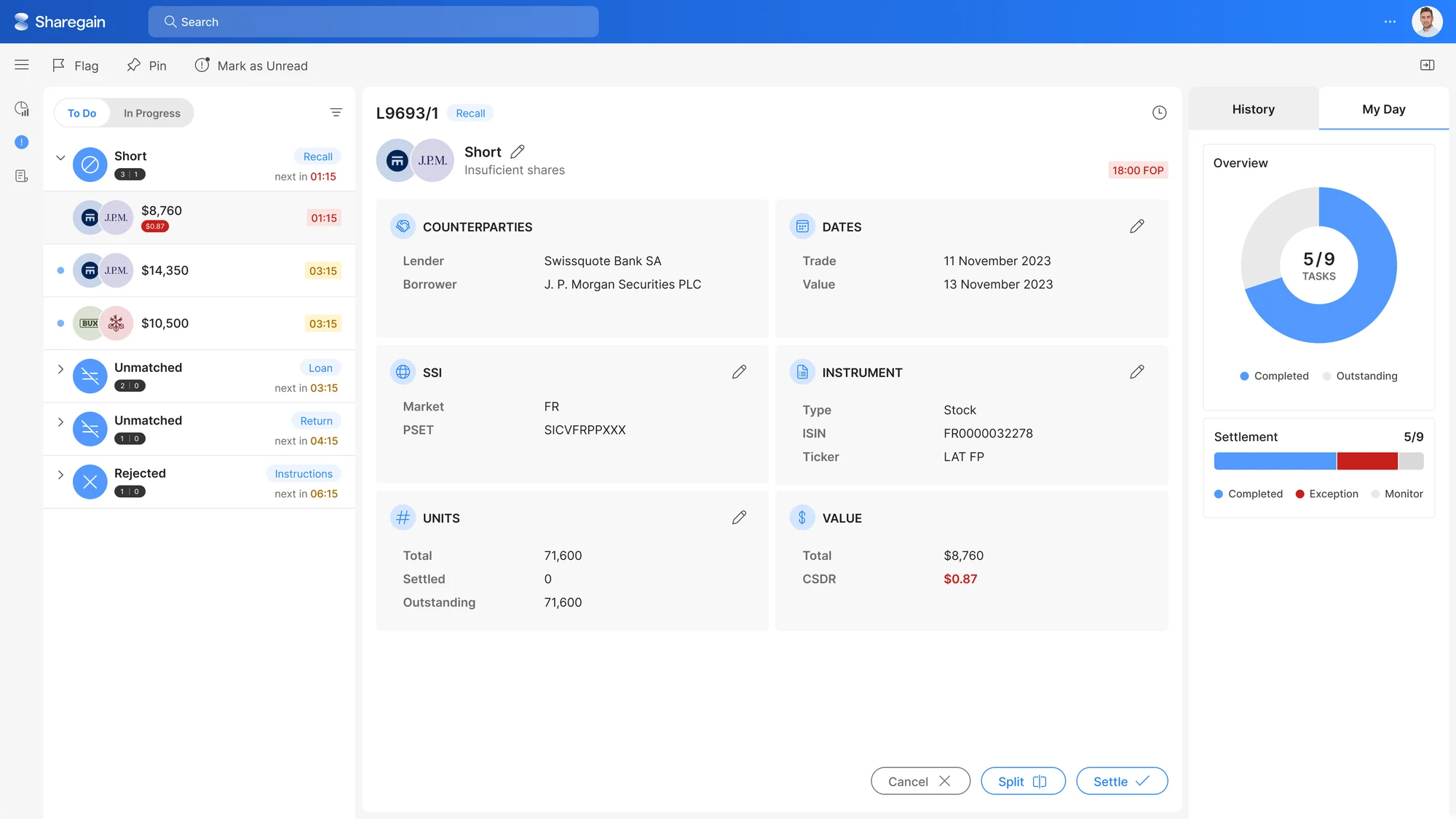
Trade exceptions grouped as Short, Unmatched, Nacked and Rejected, with countdown timers to the next deadline.
Key trade details with editable fields for quick adjustments.
A chronological timeline of exceptions and actions.
Daily task progress with charts to help prioritise.
EMT gives the operations team one place to find, track and resolve trade exceptions, with less manual input and clearer trade data, for faster resolutions and better operational efficiency.
82%
fewer manual operations per trade (target was 85%)
64%
of settlement processes handled in EMT
6.26
average daily productivity score, from the operations team survey
Working daily with four operations stakeholders showed me that the schedule of their work mattered as much as the screens. I now start research by mapping when and how the work happens.
Starting with a narrow MVP (Short, Unmatched, Nacked) gave the team value early and made later features easier to plan.
Next time I would set measurable targets before design starts: we reached 82% against an 85% target, and I'd define and test against those goals earlier.
Refine responsibility and entity management with task delegation, clearer reporting and more control over lending terms; enhance notifications, portfolio tracking and security settings; and keep moving towards a more intuitive, scalable platform.